





Article: Bridge the Gap: Bringing Together Code and Creativity

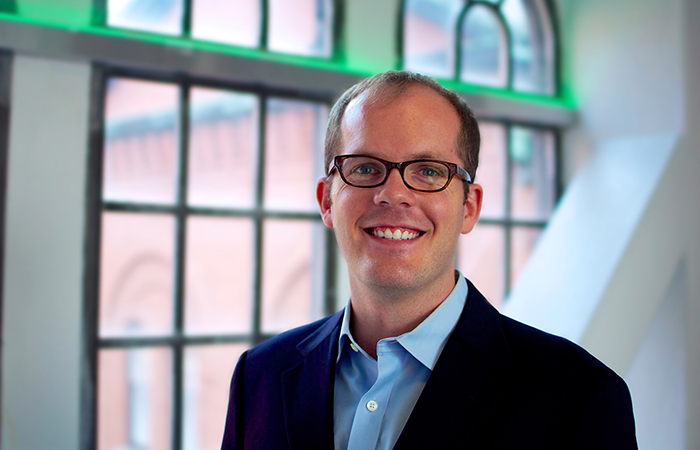

Author: Mike Glaser, Manager, Creative Partnerships at Google
We work in one of the most rapidlyevolving industries, with a constant advent of new tools and technologies that are fundamentally changing our ability to build brands effectively. This is excitingperhaps intimidatingbut also requires an evolution to the way we work as an industry. At Google, we’re keen to better understand this, and have created a program called Art, Copy & Code to not only shine a light on the addition of code to the traditional craft of art direction and copywriting, but also to explore new ways of working together. And as we’ve worked alongside some of the most respected brands and agencies, we’ve learned a number of key lessons, a few of which I’d like to share here:
1. Choose the proven and available over the new and shiny
We’ve learned the benefit of focusing our efforts on things that already exist, versus things that are about toor don’t yetexist. That might sound counterintuitive coming from an innovationdriven company like Google, but the proven and available provide three benefitsthey’re typically faster, simpler, and more successful. From a media standpoint, brands continue to do amazing things in tried and true formats. Just check out AMVBBDO and Snicker’s Google Misspellings campaign, or ColensoBBDO and Burger King’s YouTube TrueView work. Insightdriven, beautifully executed, and highly effective.
2. Build a prototype and you’re halfway home
A lot has been written about this idea, and for good reason. It doesn’t matter whether you’re talking to the most techsavvy Creative Director or to a digital neanderthal. Prototypes work for two related, but distinct, sets of reasons. First, they make inherently complex digital ideas easier to understand, easier to sell, and easier to buy. Second, prototypes change the dynamic of a teamfrom one that talks and plans, to one that makes and tests. The production mindset not only gets the team to different kinds of digital work, but does so at a much faster pace.
3. It’s time the big guys start learning from the smaller guys
We’re constantly inspired by startups and the immense value they create with drastically less money, people, and time than their corporate brethren. How? They employ speed, often utilizing an innovation process that rapidly moves through human insights, creative ideation, prototyping, testing, and iterating. While all organizations have their own methods of brainstorming, a quick peek at the startups’ playbooks might help uncover the next great marketing idea.
4. What people want in realtime isn’t the same as what brands are trying to give them in real time
Realtime marketing is one of those highly annoying buzzwordsone that brands can’t help but request, and agencies and vendors can’t help but promise. But for every successful realtime marketing moment, there seem to be myriad that fail. To better understand why, we conducted field research with avid sports fans, watching American football and hockey in living rooms over the course of several weeks. What we learned could perhaps lead the way to more relevant realtime marketing. Users want three thingsrelevance and immediacy, snackable content, and emotional rewards. After all, constant connectivity does create more opportunities for brands to reach users, but realtime is only impactful if those users care.
5. Pursue Paradigm Shifts
At the end of the day, many, if not most, of us in the creative world want to impact culture. To add our stamp on society. On our Creative Partnerships team, we’re excited and motivated by what it means for our industry. Take mobile video, for example. Last October, Motorola released Windy Day, an animated film that uses the phone’s accelerometer to allow users to control not only the camera angle of the film, but the narrative itself. This approach creates a new videowatching experiencea more active, leanin approachand could very well change the way content is consumed on mobile devices. Today, it’s clear that there is virtually unlimited opportunity for invention around marketing in the digital age; that the sheer power and scope of what’s now possible means this is surely not a moment of crisis in marketing, but a time of renaissance. We can nearly make whatever we want, with the insights to unlock new opportunities, the tools to build new experiences, and the channels to broadcast them to the world. I look forward to this bright future for our industry, and all the great work that is to come.