PHD’s book on gamification goes beyond the buzzword

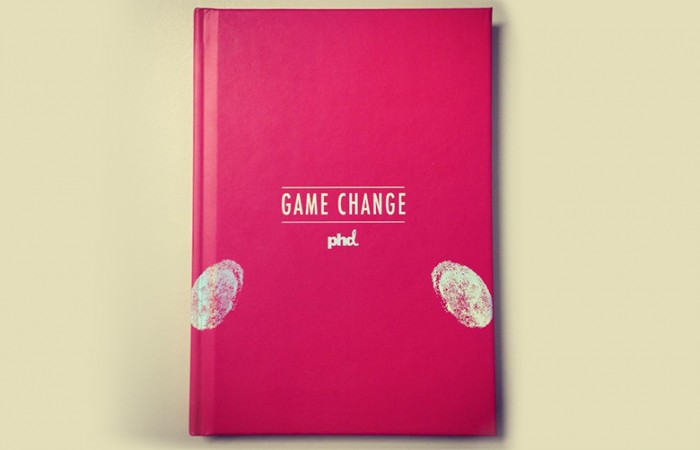

Game Change looks at game mechanics as a business model for the future
Dubai, January 26, 2014: An estimated one billion people spend at least one hour every day playing computer and videogames. Why do people put more effort into these games than their day jobs and personal relationships? Game Change, the latest book from global media and communications agency PHD, discusses how “gamification” can be harnessed and applied as a business model for the future.
Although gaming has an unfortunate capacity for attracting negative headlines, Game Change explores the growing evidence and opinions from a number of commentators who argue that gaming can actually be a force for good, especially when applied to real life problems.
“Gamification” uses game thinking and mechanics to engage users into solving problems. In a business and marketing sense, it creates new ways to engage both employees and consumers. Businesses need to consider that 7 billion hours by 1 billion gamers are up for grabs in the “Engagement Economy”.
Game Change co-author and PHD’s worldwide strategy and planning director, Mark Holden, says that if businesses and marketers apply even a fraction of the engagement seen in gaming, the payback will be incredibly significant. Gaming has the ability to create meaning and motivation relevant to the target market, whether internal or external, which results in engaged audiences and ultimately, increased revenue.
“It is not enough to expect people within any organisation to give the best part of their waking lives for money alone. People, especially the younger generation, are seeking more meaning from their working lives,” says Holden. “It is important that organisations start to take this on board. There’s a lot that can be learnt from the immersive and empowering experience that games provide. It is now becoming increasingly clear that, if employed correctly and not superficially, game mechanics can help to generate the levels of engagement required for this new working world.”
Game Change looks at “gamification” in practice through successful examples, including Nike+, Guinness and Heineken, and from sectors including finance, such as Mint.com.
PHD itself has implemented a ‘gamified’ global operating system, Source, the largest enterprise gaming system with more than 2,500 staff in over 76 countries collaborating and playing on a leaderboard at work every day. It has been adopted much more quickly than ever anticipated, thanks to the game element.
Jane McGonigal, Game Change foreword author, game designer and author of New York Times bestseller Reality is Broken, points out that innovative systems like Source empowers employees to gamefully tackle daily challenges that excite and interest them most. Not only does it help them to realise their strengths, it also creates significant improvements in employee engagement and output.
“Source has had an incredible impact on our employees and our clients,” says Elda Choucair, managing director of PHD UAE. “The added stimulation and combination of ideas and insights across the network that Source brings has delivered great results in staff performance, client satisfaction. It has also contributed to our latest new business successes.”
Game Change is co-authored by PHD’s Mark Holden, Craig Atkinson, Malcolm Devoy, Frances Ralston-Good, Chris Stephenson and writer Alasdair Reid.
Game Change is available now via ebook at iTunes, and GooglePlay – and in hard cover from January 2013 at Amazon.co.uk, priced at £15.99
About PHD:
PHD is part of the Omnicom Media Group (www.omnicommediagroup.com), the media division of Omnicom Group Inc (NYSE: OMC). Founded in London in 1990 as the first planning-led media agency, PHD is a proven innovator in communications planning and buying across broadcast, print, digital, mobile, social and emerging media. PHD is a global network with over 2,500 employees in more than 60 countries and is built on a culture of thought leadership, creativity and innovation. In the Middle East, it first opened in Dubai in 2005, adding a team for Abu Dhabi in 2008 and an office in Riyadh in 2010. At the end of 2012, PHD was awarded 20 ‘Agency of the Year’ accolades including Adweek’s ‘Global Media Agency of the Year’ and continues to deliver on its philosophy of “Finding a Better Way” for its clients, which include Arla, Porsche, Bentley, SC Johnson and Hyatt.
www.phdnetwork.com